About Pure Valley Farms
Some decisions are made with the head. Others are made with the heart and the gut — the kind that only become clear after you’ve walked through hard seasons.
Jed grew up on this same family land near Rosthern, ranching beef cattle from the time he was a boy. The work, the animals, and the land were simply home. After he and Lucia married, life took them away from the farm for a season. They tried managing it from a distance, but the reality became clear: without boots on the ground every day, the farm was quietly losing ground. Almost two years ago they made the hard choice to come home — not because it was easy, but because it was necessary if the family farm was going to survive and thrive again.
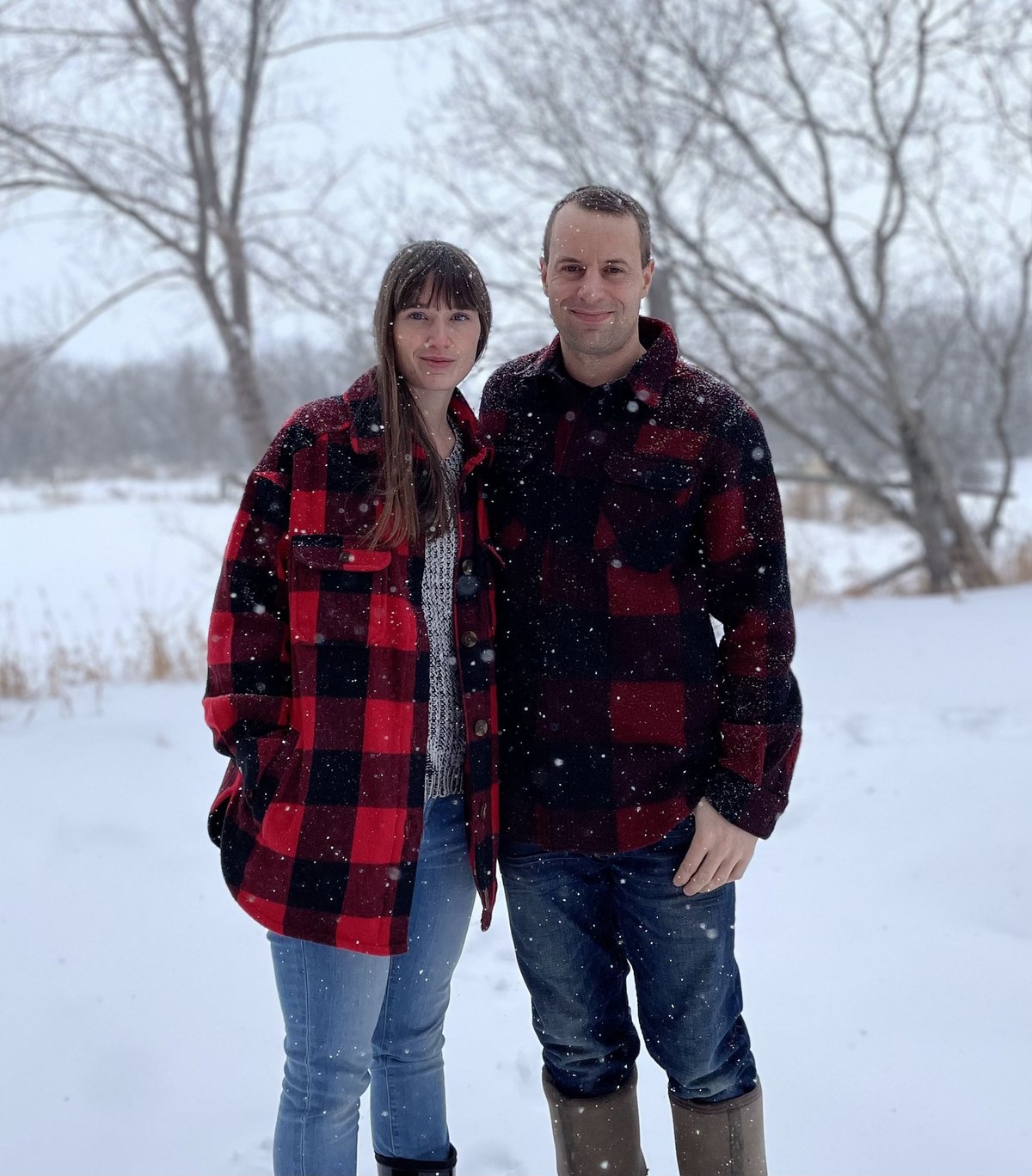
The early months were long. Long hours, little to no pay, and the slow, grinding work of turning around a place that had been running on autopilot. But they stayed. They stayed in part because Lucia has always carried a deep passion for animals — especially the vulnerable ones: the newborns, the ones that need extra care. Watching a calf grow strong under careful hands isn’t just work for her. It’s purpose.
That same care shapes everything we do.
How we raise our cattle
We raise our cattle as naturally and holistically as we know how. We limit grain and prioritize hay and forage we grow ourselves whenever possible. We practice rotational grazing and low-stress handling. We avoid routine antibiotics — and if an animal ever truly needs them, it is never sold as our meat; it goes to the commercial market instead. We avoid vaccines wherever we can, especially anything newer or mRNA-related. We use dewormers only periodically, and instead invest heavily in solid mineral and nutrition programs that support the animals’ own immune systems. And on the land itself, we work to minimize synthetic chemicals — because healthy soil grows healthier forage, healthier forage grows healthier animals, and healthier animals become healthier food.
Why it matters to us
We learned this the hard way. Both of us have walked through Lyme disease and the long recovery that follows. In that season we discovered, in a very personal way, that the quality of the food we eat is not a small detail — it’s foundational. Whole, nutrient-dense food raised with care made a real difference in our healing. That experience is why we farm the way we do. We want the meat that leaves our farm to be the same meat we put on our own table for our children.
When people ask why they should choose our beef over what sits in the grocery store cooler, the honest answer is simple. Most commercial cattle are finished on high-starch, high-GMO, chemically intensive diets that were never designed for a ruminant. Many are treated with a steady stream of drugs. Then the meat itself is often injected with water, solutions, and additives to improve appearance, texture, and shelf life. You end up paying for a product that has been altered a long way from what a cow was meant to become. Our animals are raised differently — on land and forage we actively work to keep clean, with as little chemical and pharmaceutical intervention as possible. The result is meat that carries more of what the animal actually ate, and less of what the industrial system added later.
What we believe
Underneath all of this is a quiet conviction. We are a Christian family. We believe the Lord created both people and animals, and that part of our calling is to steward the land and the livestock in a way that reflects His care. We also believe He loves people and desires that we thrive — body and soul. Treating our bodies as temples of the Holy Spirit means, among other things, choosing food that is as close as possible to how He designed it: real, whole, and raised with integrity — not the ultra-processed alternatives that fill so many shelves today.
Pure Valley Farms is still a small family operation — Jed, Lucia, and our kids. The work is physical. The learning never stops. But every decision, from how we handle a newborn calf to what we allow on our pastures, is filtered through the same question: is this the kind of care we would want behind the food that feeds our own family?
If that matters to you too, we’re glad you’re here.