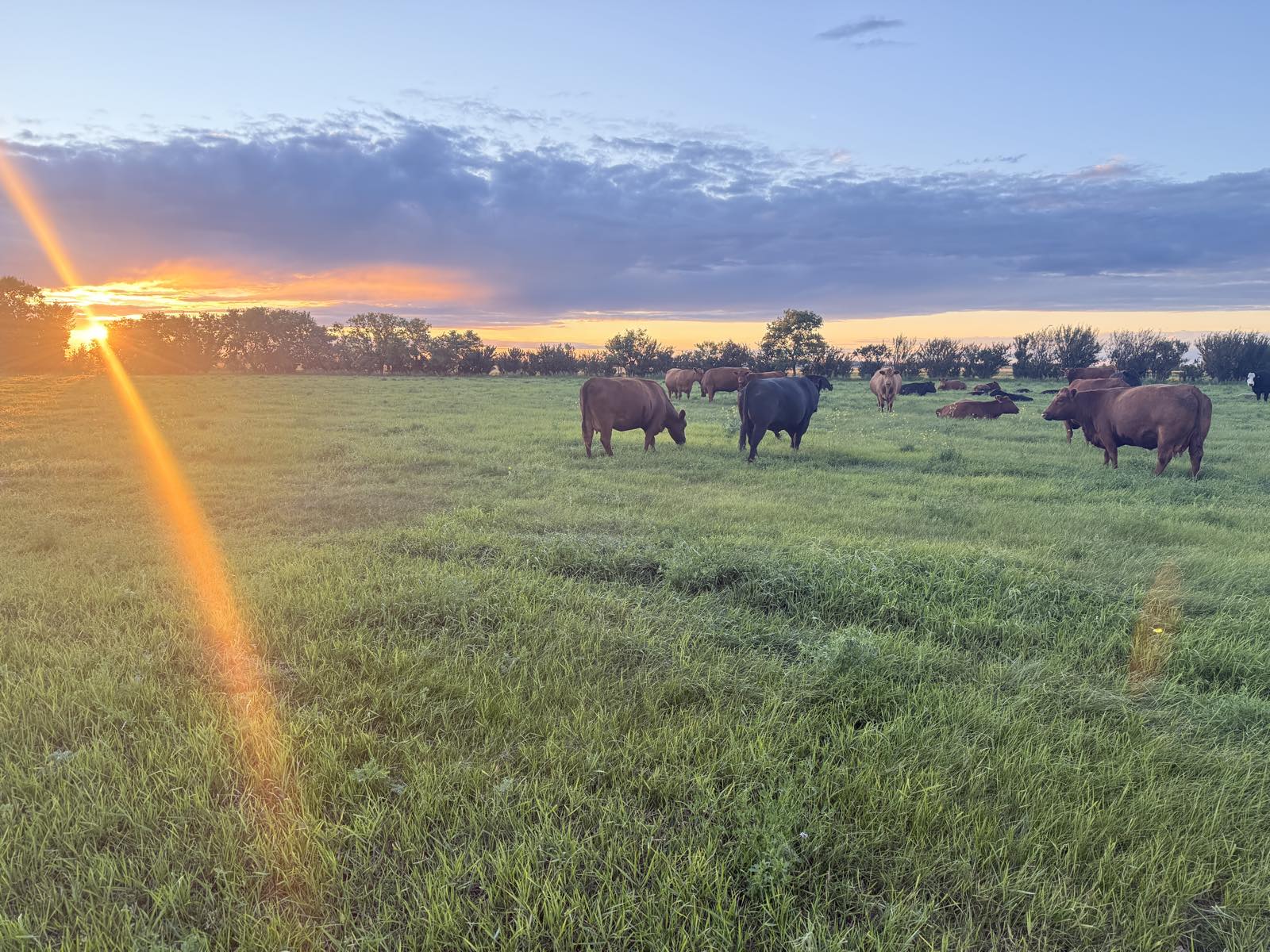
This summer has flown by. Between haying, moving cattle, raising chickens, trying to keep the billy goat in his pen, and building a new farm house for the family, let’s just say it’s been more than busy.
Here’s where things sit at the farm right now.
Quarter beef is coming back
This is the question we get more than any other, so we’ll start there. We expect to have quarter and bulk beef packages available again in late fall or early winter.
They’re sold out right now. That’s why you won’t find them in the shop.
We’d rather say “late fall or early winter” and be right than pick a date and miss it. It depends on when the animals are finished and on the abattoir’s schedule, and neither one is fully up to us. When it’s back, you’ll be the first to know.
The rain finally came
We’ve had more rain this year than we’ve seen in years, and after several dry seasons it has made all the difference. The pastures came on thick and heavy, and the hay crop with them.
Here’s what that actually means for us. We’ll have enough feed to carry the herd through winter without buying any, which is a big relief.
If you haven’t farmed through a dry year that might not sound like much. But buying feed costs money you didn’t plan on spending, and you have a lot less say in the quality and how it was grown. Growing our own is the only way we know exactly what the cattle are eating all year long.
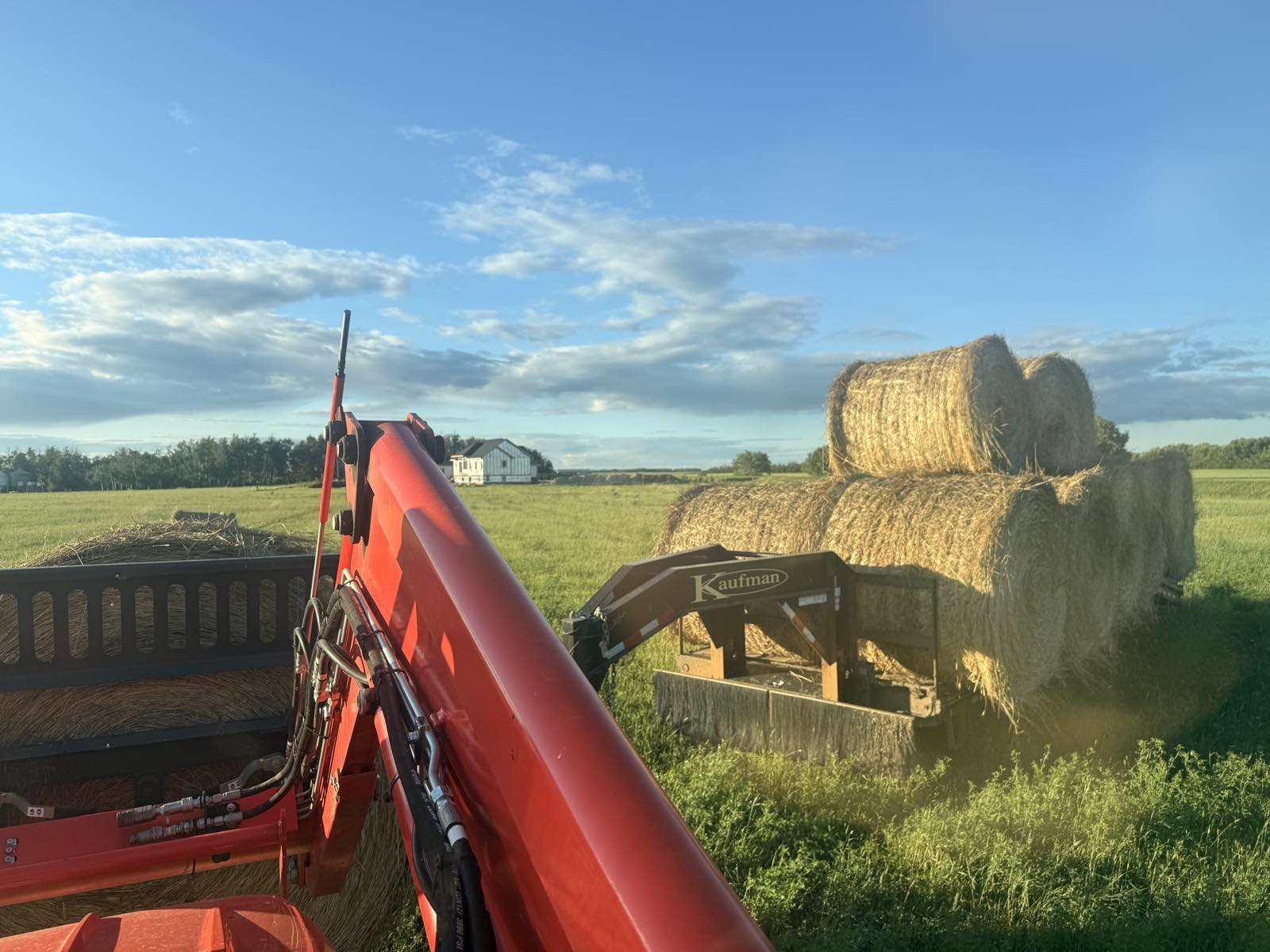
We’ve been busy putting it up. Hay and green feed bales off the field and into storage for winter. The green feed was a mix of fall rye and clover planted last fall. We seeded radish and a few other things in with it too, but the radish didn’t survive the winter.
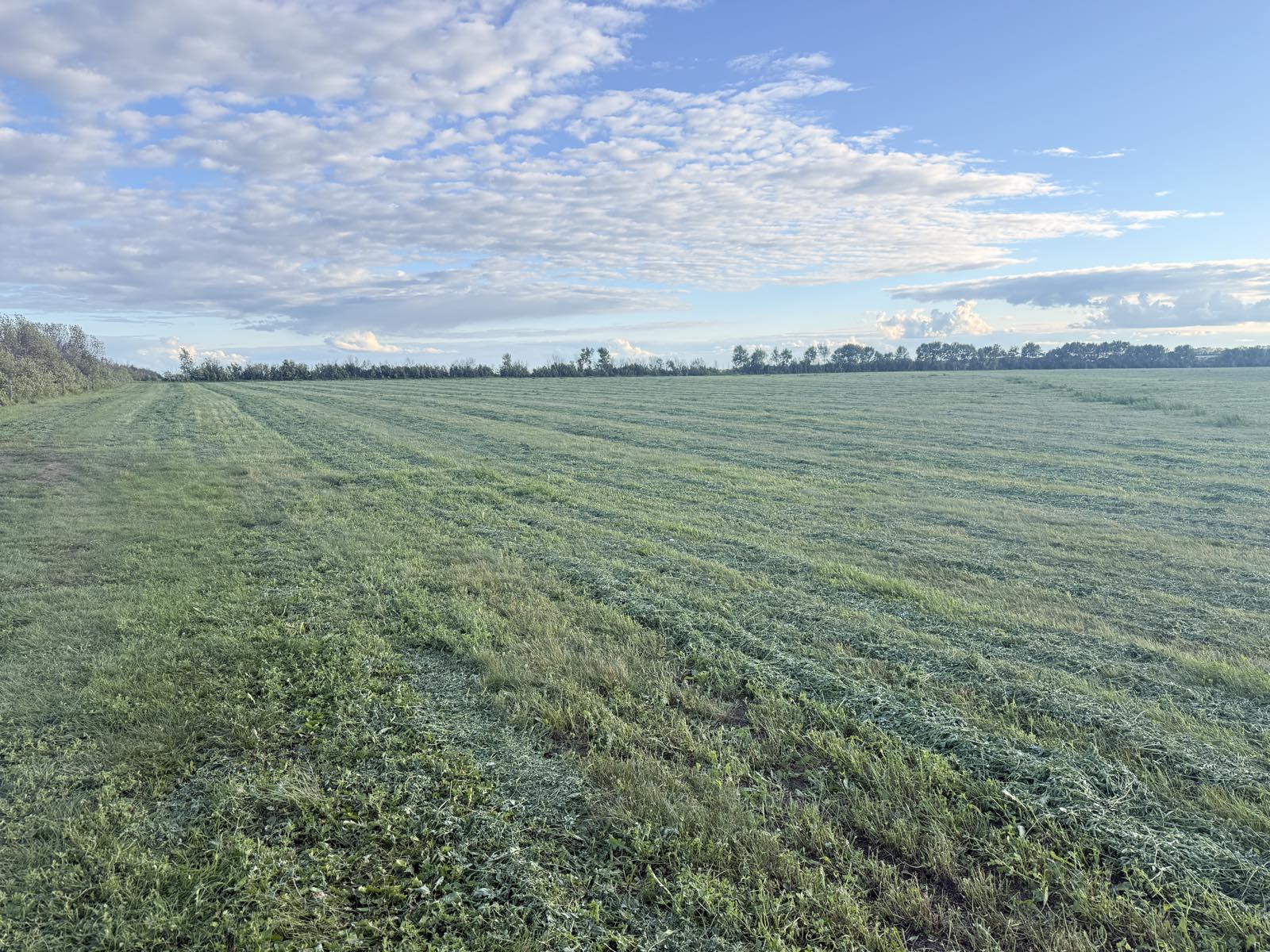
I just finished cutting our one alfalfa field this week for second cut hay, which is usually the best quality hay you can get. We haven’t been getting decent second cut for quite a few years now because of how dry it’s been.
The cattle
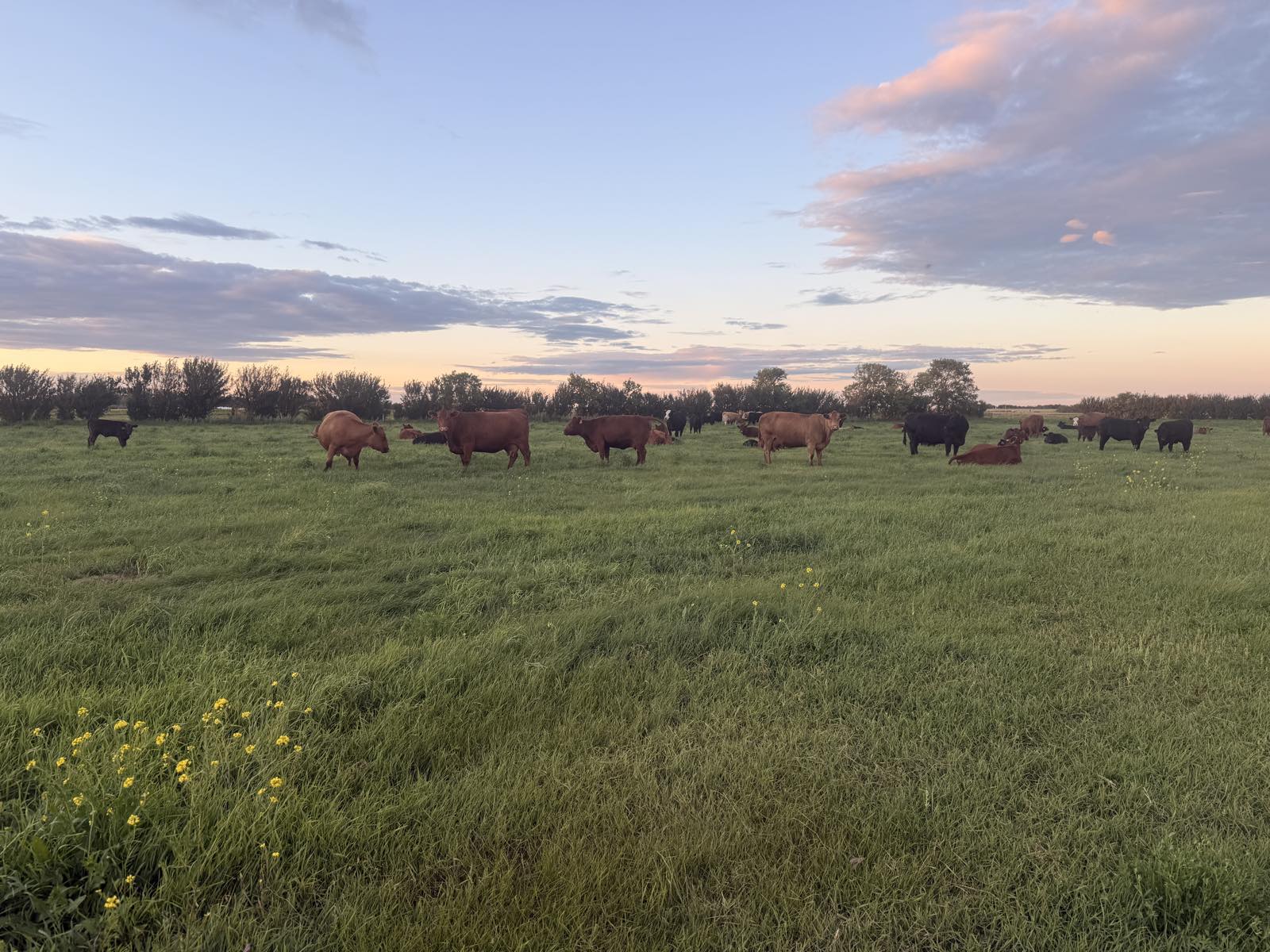
The cows just moved onto fresh pasture. And the calf crop has been doing well this year. Every cow we had bred calved, and we didn’t lose a single calf. That doesn’t happen every year and is a real blessing.
The calf that almost didn’t make it
We almost thought we were going to lose the very first calf born this year. He came early and went through some of the late spring storms we had. We pulled him into a warm room, fed him, and then worked at getting him reunited with his mom.
He was doing good for a bit, but then ended up with a bad case of pneumonia. I think from the stress of that first week of life.
We ended up needing to treat him. That’s something we avoid at all costs, but in this case he was looking like he may not make it. He recovered, which I believe was an answer to prayer.
He’s marked down for shipping to the commercial stockyards this fall though, because we treated him. An animal we’ve had to treat doesn’t stay in our future herd and doesn’t get butchered for meat we sell. That rule doesn’t bend, and it’s the whole reason we can tell you what is and isn’t in your beef.
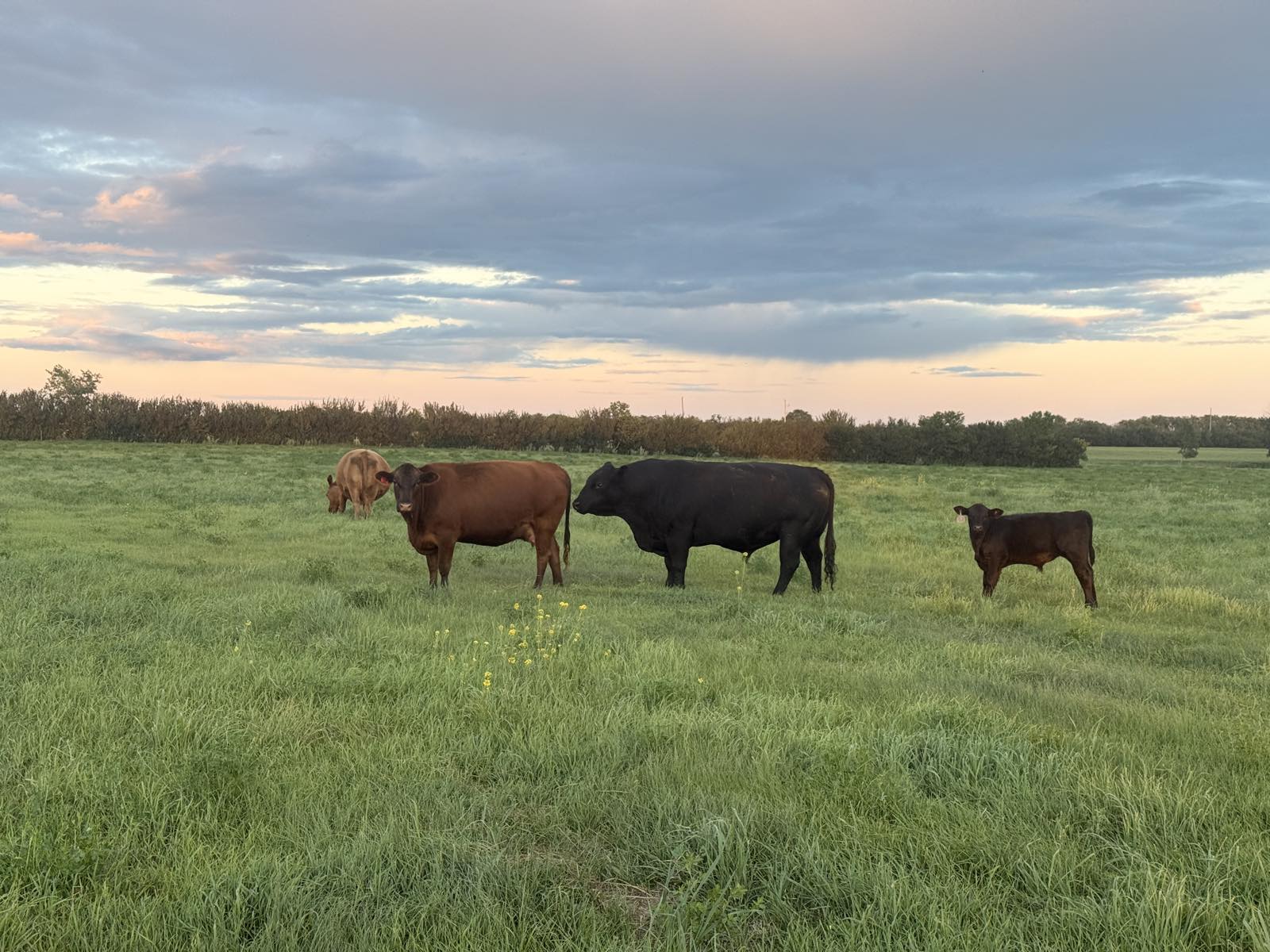
The rest of the herd is being raised the way we always strive to raise them. No antibiotics. No added hormones. Moved onto fresh grass through the season, and cut and wrapped at a provincially inspected abattoir.
An honest word about tenderness
We’ve had some challenges in the past with the quality and tenderness of some of our meat. We’d rather say that plainly than pretend otherwise.
Part of it is simply what grass-finished beef is. Most beef people are used to comes from cattle fed a heavy diet of GMO corn, soy, wheat and other starches. That isn’t a normal diet for a ruminant, but it does lay down a lot of intramuscular fat, and that’s what North America has grown accustomed to over the last thirty years or so of backgrounding and finishing cattle in feedlots. Ours are raised primarily on grass and finished on grass and hay without much grain. It comes out leaner, and it eats differently.
The other part is the weather, and that one we have to manage. The dry seasons meant less lush, less nutritious forage than we’d want, which compounded the challenge on our end of finishing animals on as much forage and as little grain as possible.
We’ve been working hard at making improvements so the quality keeps getting better, and this year’s rain helps with that more than anything else could. Better feed means a better finish.
If something you get from us isn’t right, tell us. We stand behind it.
The chickens
We’re right in the middle of butchering this year’s chicken crop as I write this. Same approach as the beef: no antibiotics, no hormones, moved onto fresh pasture regularly, and fed non-GMO, unsprayed feed as much as we can manage.
The birds are raised on pre-orders, so this year’s are already spoken for. But we may have a few extra once every pre-order is filled. If you’d like one, email us and we’ll tell you what’s left.
If you want to be on the list for next season, there’s more detail on the pasture-raised chicken page, including how the pre-order works and the option to come help with processing day if that interests you.
We’re building a house
As mentioned, the other reason this summer has been chaos. We’re building on the main farm yard. It’s a good number of months from done, but living right on the yard instead of driving to it is something we’re looking forward to.
In the freezer right now
We’re still stocked on ground beef, strip loin and tenderloin steaks, hot dogs, smokies, snack sticks, jerky and soup bones.
Our new website is live
We rebuilt purevalleyfarms.ca from the ground up. It’s faster, it works properly on a phone, and ordering takes a fraction of the steps it used to. Three things worth knowing:
- Delivery is free on orders of $125 or more. Under that it’s a $20 flat rate.
- We deliver the whole Saskatoon to Prince Albert corridor now. The farm sits between the two, so PA is no further for us than Saskatoon.
- Anyone anywhere in Saskatchewan can order for farm pickup. You don’t need to be in the delivery area to buy from us.
If you run into something broken or not working on our new website, please tell us. We’d rather hear it from you.
Thanks for sticking with us. For an operation our size it really does matter.
Jed & Lucia
Pure Valley Farms, near Rosthern, SK
(306) 380-6984